1
Chatbot Redesign: +34% Lead Quality
Cisco Systems
How a unified chat experience doubled out click-trough rate
Improved Conversations, Happier Customers.
Project Overview
The chatbot redesign aimed to adopt Generative AI to increase drive conversions, but Cisco had not built AI capabilities.
Team
Technical Product Manager, AI Business Manager Operations Manager, Marketing Strategist, UI Designer, Engineering team, Studio team.
[Category]
Cisco Systems
[My Role]
Led Product Design and UX Strategy
[Platform]
Responsive Design
[Timeline]
March 2023- October 2024
Problem
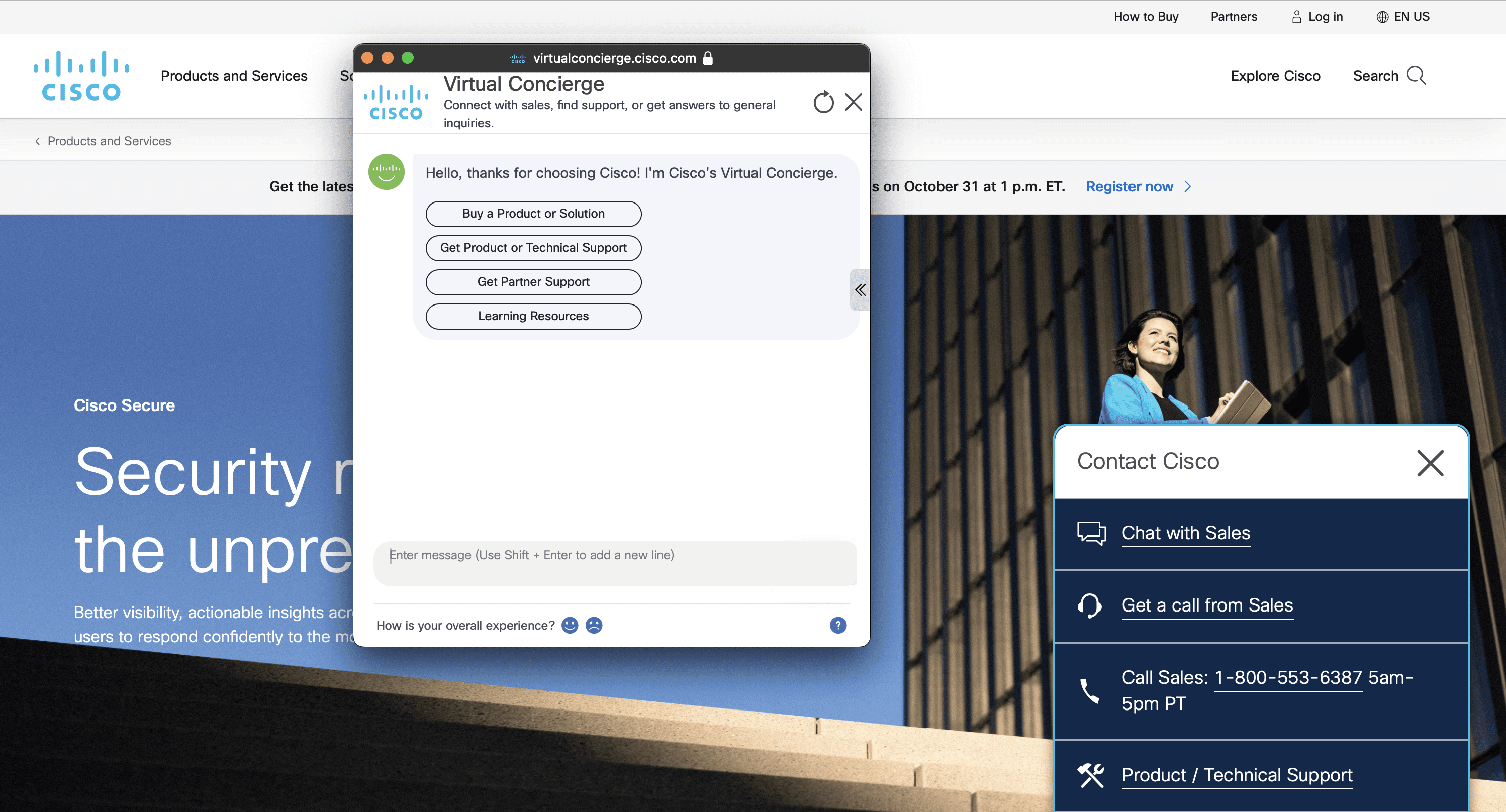
Before there was Cisco's 'Virtual Concierge'
The chatbot experience was outdated that users were left confused and lacked trust in the platform. The project aimed to improve usability, align it with brand standards, and being to integrate Generative AI.
Goal
Improve chatbot information architecture, streamline domains and intents to create focused user journeys.
Identifiy and improve UI components that support user intent and scale the design system for chat AI.
Enchance the conversational dialogue to eliminate redundancies for better performance to handle user needs.
Frustrations
Current chat journeys that didn't resonate with users.
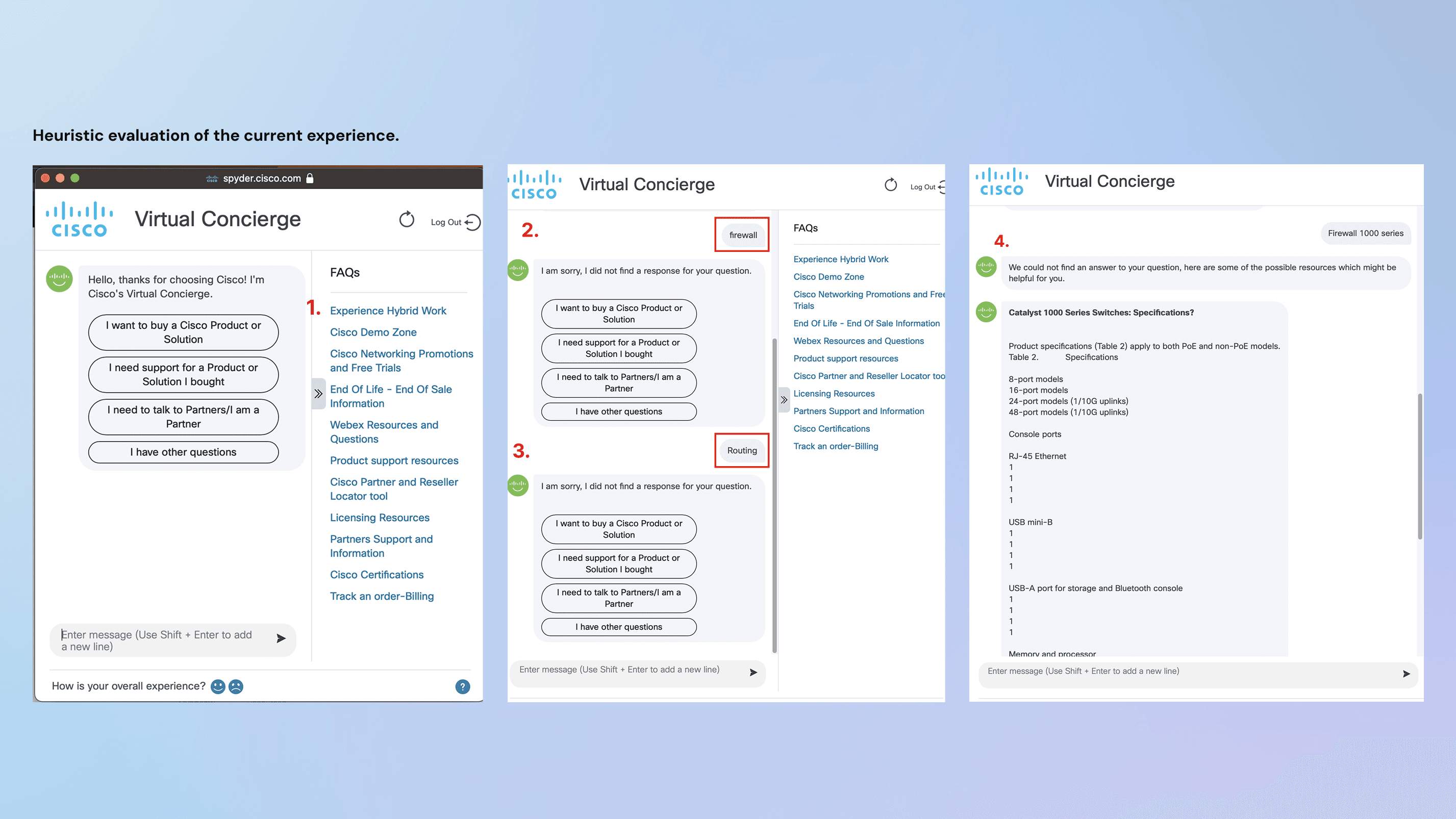
Finding information required too many clicks, and the chatbot’s attempt to serve four user types only added to customer confusion.
The chatbot was unable to handle simple tasks and redirected often that left a negative impact on customers wanting to access information quickly.
Process
1. Auditing the chat experience
Benchmarked AI chatbot against competitors to identify best practices for AI chatbots.
Analyzed user behavior and sentiment data to pinpoint purpose of the chatbot.
Conducted a usability evaluation and leveraged existing research to emphasize with users experience.
2. Insights
Customers are the primary users, and they used the chatbot for product inquiry (before purchase), general inquiry, and product support.
The content caused significant confusion, users had little confidence chatbot can answer more than basic questions.
The chatbot was bloated with too many topics that didn't resnoate with users.
Impact
13.5% increase in click-through-rate (CTR).
34% increase in engagement and demand throughout global cloud pages.
40% improvement in focused chat journeys that resonate with users.
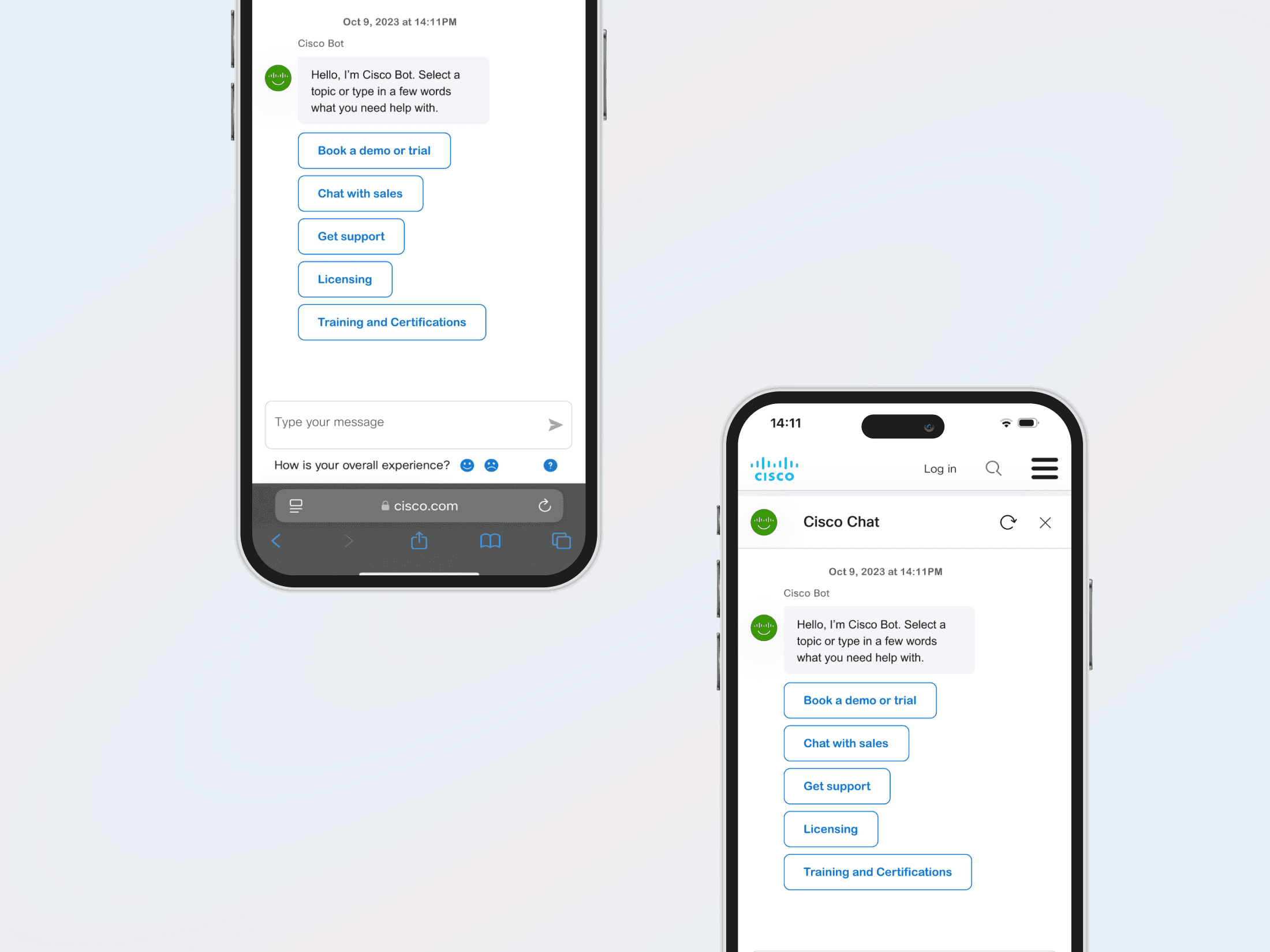
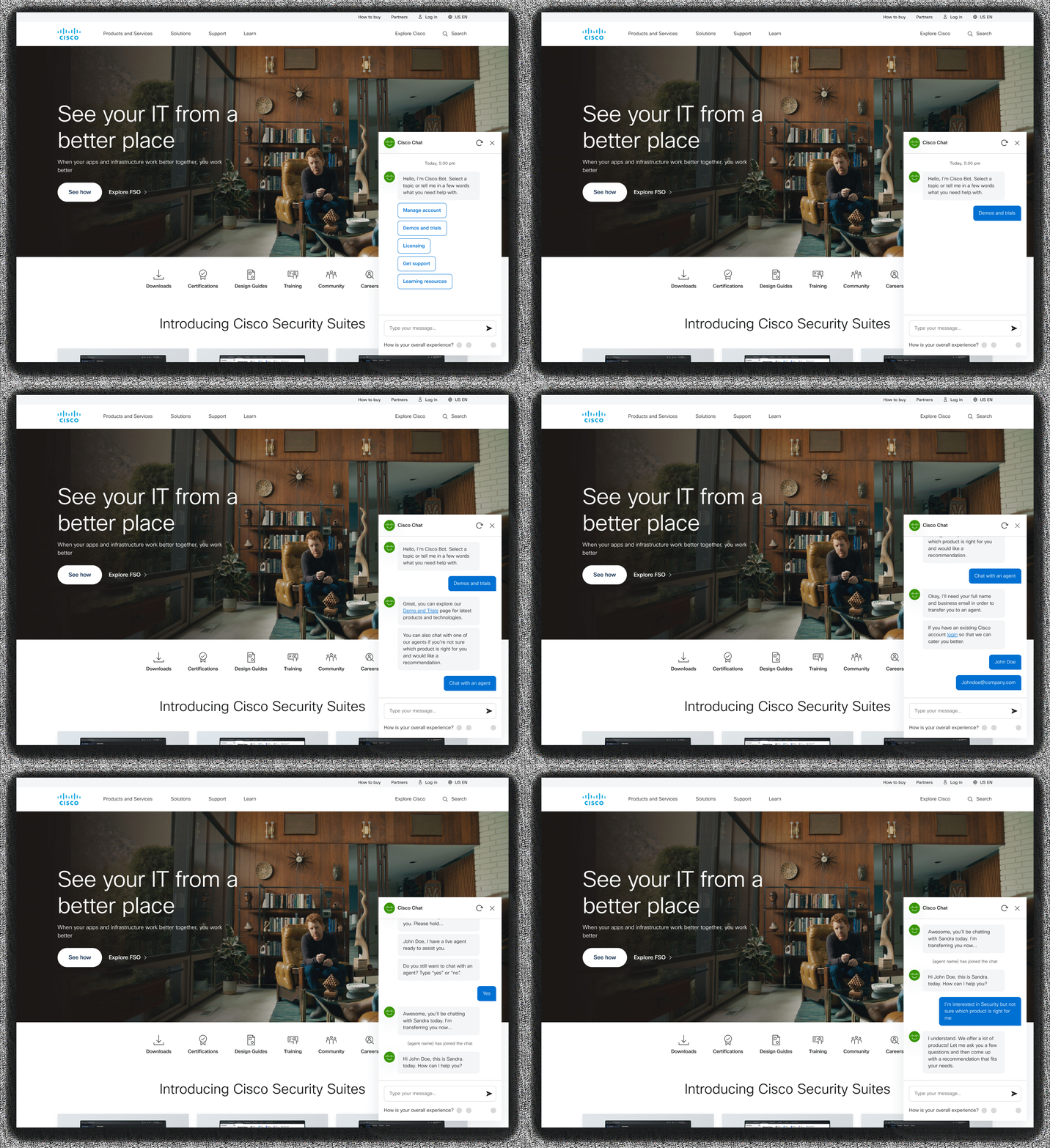
Final Design of 'Demo and Free Trails' chat jounrey
3. Design Solution
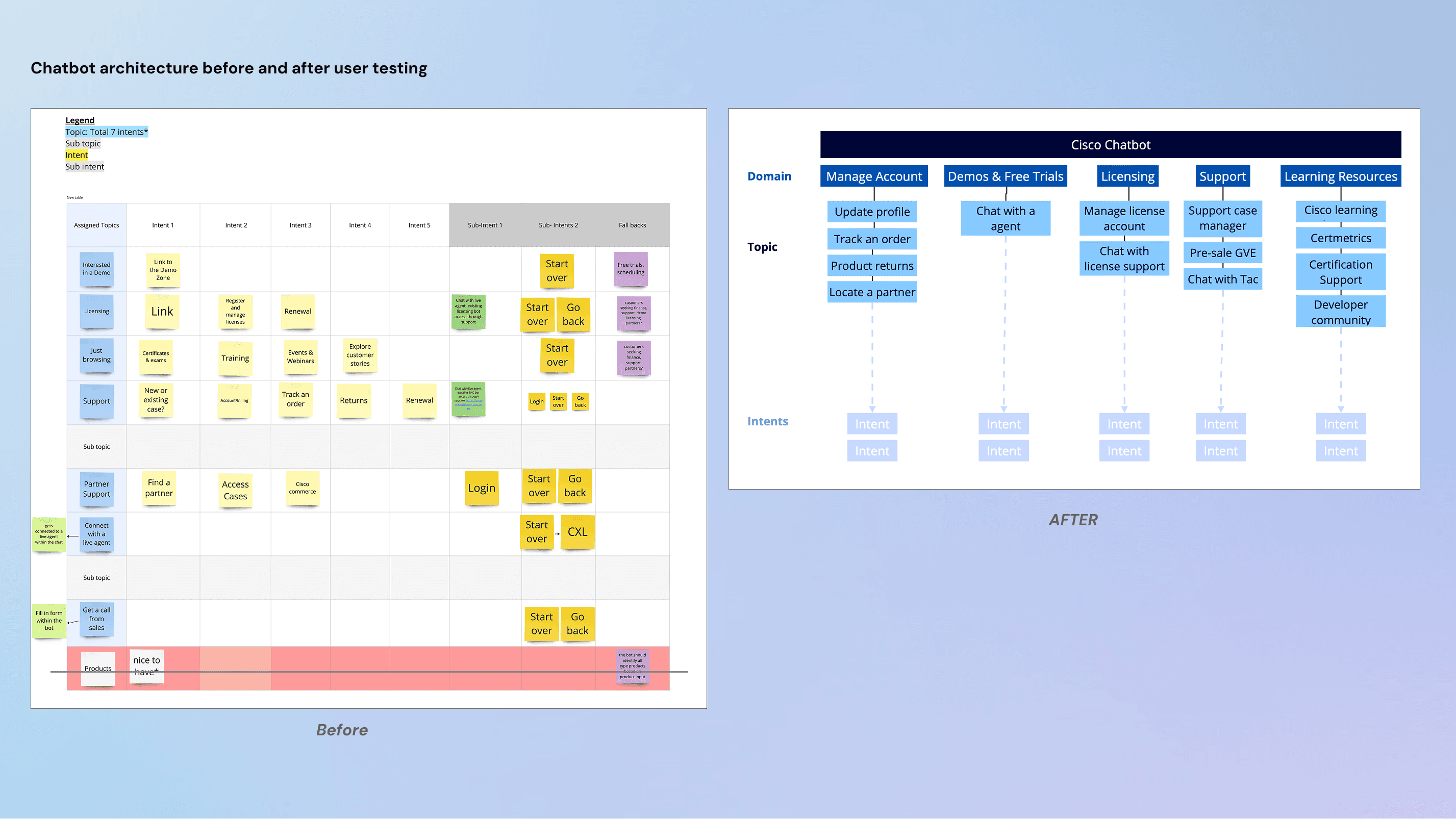
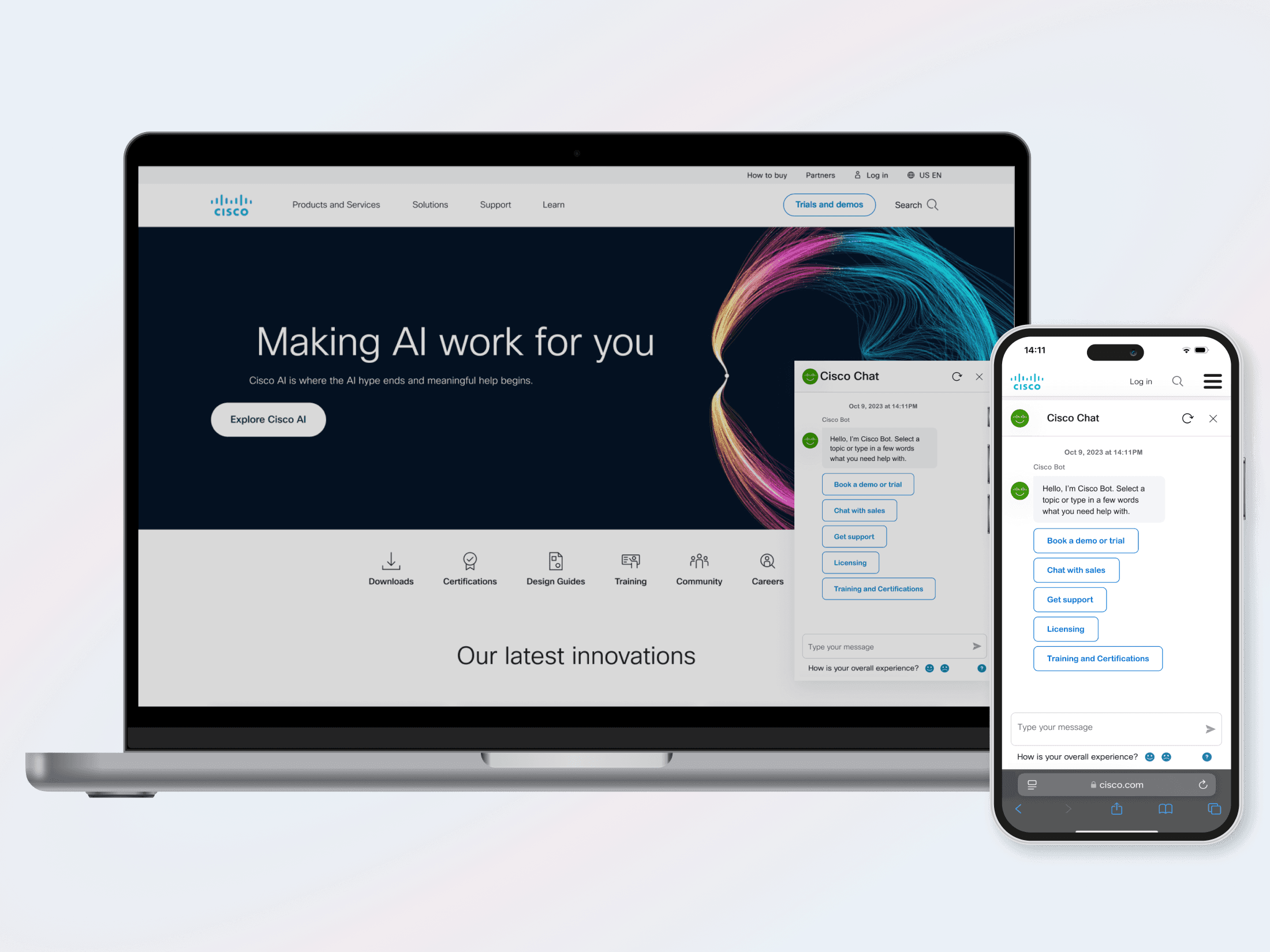
Improve and simplify the information architecture to create focused journeys.
Visually improve the chatbot to reflect the currrent Cisco brand leveraging the design system.
Debloat the chatbot and imrpove the content to eliminate task confusion.
4. Testing & Iteration
Coordinated users testing to identify and prioritized topics and intents that were relevant to users.
Gathered technical feedback with AI managers and engineering team to ensure feasibility.
Created a natural, user-friendly conversational script to ensure seamless interaction with the bot.


Final Design
Key Learnings
Keep it simple
Users value a quick and easy experience on desktop and mobile
An iterative approach pays off
Designing iteratively improved product quality, reduce risk and costs. Tailoring user centricity.
User Feedback
Partnering with the research team to actively gain user feedback provided faster identification on user pain points and reduced bias.
Cisco Systems
Chatbot Redesign: +34% Lead Quality
How a unified chat experience doubled out click-trough rate
Improved Conversations, Happier Customers.
Project Overview
The chatbot redesign aimed to adopt Generative AI to increase drive conversions, but Cisco had not built AI capabilities.
Team
Technical Product Manager, AI Business Manager Operations Manager, Marketing Strategist, UI Designer, Engineering team, Studio team.
[My Role]
Led Product Design and UX Strategy
[Platform]
Responsive Design
[Timeline]
March 2023- October 2024
Impact
13.5% increase in click-through-rate (CTR).
34% increase in engagement and demand throughout global cloud pages.
40% improvement in focused chat journeys that resonate with users.
Final Design of 'Demo and Free Trails' chat jounrey
Problem
Before there was Cisco's 'Virtual Concierge'
The chatbot experience was outdated that users were left confused and lacked trust in the platform. The project aimed to improve usability, align it with brand standards, and being to integrate Generative AI.
Frustrations
Current chat journeys that didn't resonate with users.
Finding information required too many clicks, and the chatbot’s attempt to serve four user types only added to customer confusion.
The chatbot was unable to handle simple tasks and redirected often that left a negative impact on customers wanting to access information quickly.
Goal
Improve chatbot information architecture, streamline domains and intents to create focused user journeys.
Identifiy and improve UI components that support user intent and scale the design system for chat AI.
Enchance the conversational dialogue to eliminate redundancies for better performance to handle user needs.
Process
1. Auditing the chat experience
Benchmarked AI chatbot against competitors to identify best practices for AI chatbots.
Analyzed user behavior and sentiment data to pinpoint purpose of the chatbot.
Conducted a usability evaluation and leveraged existing research to emphasize with users experience.
2. Insights
Customers are the primary users, and they used the chatbot for product inquiry (before purchase), general inquiry, and product support.
The content caused significant confusion, users had little confidence chatbot can answer more than basic questions.
The chatbot was bloated with too many topics that didn't resnoate with users.
3. Design Solution
Improve and simplify the information architecture to create focused journeys.
Visually improve the chatbot to reflect the currrent Cisco brand leveraging the design system.
Debloat the chatbot and imrpove the content to eliminate task confusion.
4. Testing & Iteration
Coordinated users testing to identify and prioritized topics and intents that were relevant to users.
Gathered technical feedback with AI managers and engineering team to ensure feasibility.
Created a natural, user-friendly conversational script to ensure seamless interaction with the bot.
Final Design
Key Learnings
Keep it simple
Users value a quick and easy experience on desktop and mobile
An iterative approach pays off
Designing iteratively improved product quality, reduce risk and costs. Tailoring user centricity.
User Feedback
Partnering with the research team to actively gain user feedback provided faster identification on user pain points and reduced bias.
< Previous Project
Next Project >
1
Chatbot Redesign: +34% Lead Quality
Cisco Systems
How a unified chat experience doubled out click-trough rate
Improved Conversations, Happier Customers.
Project Overview
The chatbot redesign aimed to adopt Generative AI to increase drive conversions, but Cisco had not built AI capabilities.
Team
Technical Product Manager, AI Business Manager Operations Manager, Marketing Strategist, UI Designer, Engineering team, Studio team.
[Category]
Cisco Systems
[My Role]
Led Product Design and UX Strategy
[Platform]
Responsive Design
[Timeline]
March 2023- October 2024
Final Design of 'Demo and Free Trails' chat jounrey
Problem
Before there was Cisco's 'Virtual Concierge'
The chatbot experience was outdated that users were left confused and lacked trust in the platform. The project aimed to improve usability, align it with brand standards, and being to integrate Generative AI.
Goal
Improve chatbot information architecture, streamline domains and intents to create focused user journeys.
Identifiy and improve UI components that support user intent and scale the design system for chat AI.
Enchance the conversational dialogue to eliminate redundancies for better performance to handle user needs.
Frustrations
Current chat journeys that didn't resonate with users.
Finding information required too many clicks, and the chatbot’s attempt to serve four user types only added to customer confusion.
The chatbot was unable to handle simple tasks and redirected often that left a negative impact on customers wanting to access information quickly.
Process
1. Auditing the chat experience
Benchmarked AI chatbot against competitors to identify best practices for AI chatbots.
Analyzed user behavior and sentiment data to pinpoint purpose of the chatbot.
Conducted a usability evaluation and leveraged existing research to emphasize with users experience.
2. Insights
Customers are the primary users, and they used the chatbot for product inquiry (before purchase), general inquiry, and product support.
The content caused significant confusion, users had little confidence chatbot can answer more than basic questions.
The chatbot was bloated with too many topics that didn't resnoate with users.
Impact
13.5% increase in click-through-rate (CTR).
34% increase in engagement and demand throughout global cloud pages.
40% improvement in focused chat journeys that resonate with users.
Process
3. Design Solution
Improve and simplify the information architecture to create focused journeys.
Visually improve the chatbot to reflect the currrent Cisco brand leveraging the design system.
Debloat the chatbot and imrpove the content to eliminate task confusion.
4. Testing & Iteration
Coordinated users testing to identify and prioritized topics and intents that were relevant to users.
Gathered technical feedback with AI managers and engineering team to ensure feasibility.
Created a natural, user-friendly conversational script to ensure seamless interaction with the bot.
Key Learnings
Keep it simple
Users value a quick and easy experience on desktop and mobile
An iterative approach pays off
Designing iteratively improved product quality, reduce risk and costs. Tailoring user centricity.
User Feedback
Partnering with the research team to actively gain user feedback provided faster identification on user pain points and reduced bias.
Final Design